
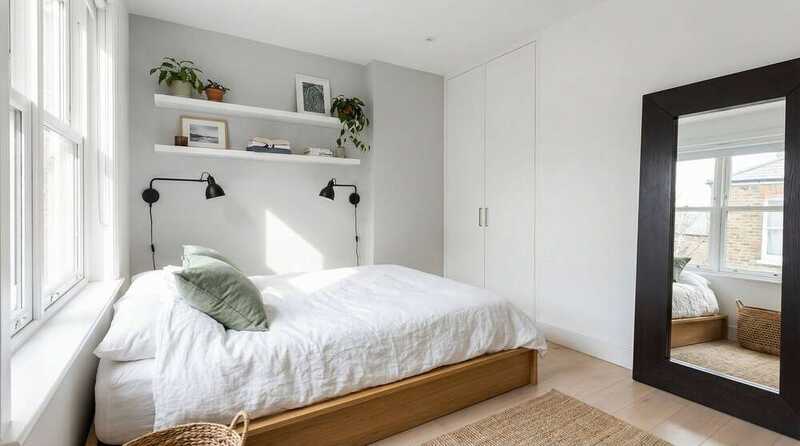
Transform your compact bedroom into a functional, stylish retreat that feels spacious and serene. This step-by-step guide shows you how to maximize every inch of a small bedroom for just $300, with smart product choices and space-saving strategies that actually work.
Pin This for Later!
Share This Article
The Budget Breakdown
Before diving into the makeover, let's look at how we allocated the $300 budget to maximize impact in a small space. This strategic approach prioritizes multi-functional pieces and vertical storage to make your room feel larger and more organized.
Budget Allocation
- Space-Saving Bedding$80
- Wall-Mounted Lighting$40
- Vertical Storage Solutions$60
- Mirror (Creates Illusion of Space)$50
- Multipurpose Furniture$40
- Decorative Accents$30
- Total$300
Step 1: Choose Space-Conscious Bedding
In a small bedroom, bulky bedding can overwhelm the space. Opt for streamlined bedding in light, neutral colors that make the room feel airy and open. White, soft gray, or pale blue bedding reflects light and creates the illusion of more space. Apartment Therapy's small space experts recommend skipping the bed skirt and letting the floor show—it makes the room feel less cluttered and more modern.
💡 Pro Tip: Low-Profile Bedding
In small bedrooms, choose a platform bed or low-profile bed frame. The lower the bed, the more vertical space remains, making ceilings feel higher and the room more spacious.
Recommended: Lightweight Comforter Set
A streamlined 3-piece comforter set in soft gray or white creates an airy feel perfect for small bedrooms. Microfiber construction keeps it lightweight while providing warmth.
Step 2: Install Wall-Mounted Lighting
Floor lamps and bulky table lamps take up precious floor and surface space in small bedrooms. Wall-mounted sconces or swing-arm lamps free up your nightstand while providing functional task lighting. Better Homes & Gardens' lighting designers note that wall-mounted fixtures also draw the eye upward, making ceilings feel taller and rooms more spacious.
Recommended: Swing-Arm Wall Sconce
A modern matte black swing-arm sconce provides adjustable task lighting while freeing up nightstand space. Hardwired or plug-in options available.
Step 3: Maximize Vertical Storage
When floor space is limited, think vertically. Floating shelves, over-the-door organizers, and wall-mounted hooks utilize unused wall space for storage without cluttering the floor. The Spruce's organization experts emphasize that keeping the floor clear makes small rooms feel significantly larger—every visible inch of floor space contributes to the perception of spaciousness.
💡 Pro Tip: Clear the Floor
Aim to keep at least 50% of your floor space visible and clear. This single strategy makes the biggest difference in how spacious a small bedroom feels.
Recommended: Floating Shelves Set
A set of 3 white floating shelves (various sizes) creates vertical storage for books, plants, and decor without taking up floor space. Easy to install with included hardware.
Step 4: Use Mirrors to Expand Space
Mirrors are the secret weapon of small space design. A well-placed mirror reflects light and creates the illusion of depth, making your bedroom feel nearly twice as large. Real Simple's design team recommends positioning mirrors opposite windows to maximize natural light reflection, or placing a large mirror behind a light source to amplify its effect.
Recommended: Full-Length Wall Mirror
A 65" full-length mirror with thin black frame leans against the wall or mounts vertically. Reflects light beautifully and makes small bedrooms feel twice as spacious.
Step 5: Choose Multipurpose Furniture
In small bedrooms, every piece of furniture should earn its keep by serving multiple functions. An ottoman with hidden storage provides seating and organization. A nightstand with drawers offers more storage than an open shelf. A fold-down desk mounts to the wall and disappears when not in use.
Step 6: Add Personality with Minimal Decor
Small bedrooms require restraint when it comes to decorative accents. Choose a few meaningful pieces rather than cluttering surfaces with knick-knacks. One substantial plant, a small stack of favorite books, and a scented candle create personality without visual chaos.
The Final Result
By following these six steps and sticking to the $300 budget, you can completely transform your small bedroom into a space that feels open, organized, and intentional—proof that you don't need square footage to create a beautiful room. The key is choosing space-conscious pieces, maximizing vertical storage, and maintaining visual simplicity.
Remember, small bedroom design is about editing and prioritizing. Keep only what you truly need and love, and give every item a designated home. The most successful small bedrooms are those that feel calm, uncluttered, and thoughtfully curated—a peaceful retreat regardless of size.