
Strategic Mirror Placement: Make Small Spaces Feel Twice as Large
Discover the optical illusions designers use to make cramped rooms feel spacious and bright. This complete guide to mirror placement shows you exactly where and how to position mirrors for maximum space-expanding impact.
Share This Article
Mirrors are the secret weapon of small-space design. A well-placed mirror can make a cramped room feel twice as large, double the natural light, and create the illusion of depth where none exists. But random mirror placement can actually make a space feel more chaotic and cluttered. The key is understanding the science of reflection and using it strategically to transform your small spaces.
Why Mirrors Work: The Science of Spatial Perception
Our brains interpret reflected images as actual space, which is why a mirrored wall can make a room feel dramatically larger. Mirrors also bounce light around the room, making dark spaces feel brighter and more open. This double effect—visual expansion plus increased brightness—is why mirrors are so effective in small spaces where every square foot counts.
The impact isn't just psychological. Mirrors literally double what they reflect, so a mirror placed opposite a window effectively doubles your natural light source. A mirror reflecting a beautiful view brings the outdoors in, making the room feel connected to a larger space beyond its walls. Understanding what your mirror reflects is just as important as the mirror itself.
The Golden Rules of Mirror Placement
1. Reflect Light, Not Clutter
The most important rule in mirror placement is being intentional about what the mirror reflects. A mirror should reflect something beautiful—a window, a piece of artwork, an attractive architectural feature, or a well-styled vignette. Never position a mirror to reflect clutter, blank walls, or unattractive views. This just doubles the visual chaos and makes the space feel more cramped.
Before hanging a mirror, stand where the mirror will be and look at what it will reflect. Walk around the room and view the reflection from different angles. If you see piles of mail, laundry, or random clutter, that mirror placement won't work. Rearrange the room or choose a different wall until the reflection is something you want to see doubled.
2. Position Mirrors Opposite or Adjacent to Windows
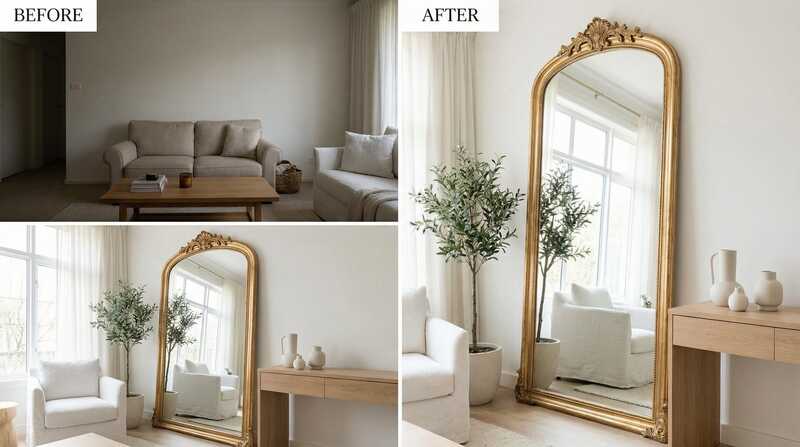
The single most effective mirror placement for making a room feel larger and brighter is opposite or perpendicular to a window. This captures and reflects natural light throughout the space, making it feel airy and open. In very small rooms, a large mirror opposite the main window can create the illusion of a second window, dramatically expanding the perceived space.
If placing a mirror directly opposite a window isn't possible, position it on an adjacent wall where it will still catch and reflect light. Even a mirror placed at an angle to a window will bounce more light around the room than a mirror on a wall that never sees direct sunlight.
3. Go Large for Maximum Impact
In small spaces, bigger is almost always better when it comes to mirrors. A collection of small mirrors creates visual clutter and doesn't have the same space-expanding effect as one large mirror. Aim for mirrors that are at least 30-40 inches in one dimension—large enough to reflect a substantial portion of the room and create a real sense of depth.
Floor-to-ceiling mirrors or oversized leaning mirrors (propped against a wall) are particularly effective in small spaces. They create the illusion of an entire additional room beyond the wall, making the space feel dramatically larger. If you're worried about a large mirror overwhelming a small room, choose a simple frame or no frame at all to keep the focus on the reflection, not the mirror itself.
4. Create Focal Points with Statement Mirrors
A beautiful mirror can serve as both functional and decorative, acting as a focal point while making the room feel larger. An ornate vintage mirror above a console table, a modern geometric mirror over the sofa, or a sunburst mirror in the entryway draws the eye and adds personality while serving the practical purpose of expanding the space.
When using a mirror as a focal point, ensure it's hung at the right height—typically 57-60 inches from the floor to the center of the mirror, which is standard gallery height. This ensures the mirror is at eye level for most people, making it both functional and visually balanced.
5. Layer Mirrors for Depth
In very small spaces, consider layering multiple mirrors at different depths to create even more dimension. A large mirror on the wall with a smaller decorative mirror leaning in front of it on a console table creates layers that add visual interest and depth. This technique works especially well in entryways and dining rooms where you want maximum impact in a small footprint.
You can also create a gallery wall of mirrors in varying sizes and shapes. This works best when the mirrors share a common element (all gold frames, all round shapes, all vintage styles) to create cohesion. The multiple reflections create a kaleidoscope effect that's visually interesting while still expanding the space.
Room-by-Room Mirror Placement Strategies
Living Room: Expand Your Main Living Space
In small living rooms, place a large mirror on the wall opposite or perpendicular to your main window. This is typically the wall behind the sofa or opposite the seating area. A horizontal mirror (wider than it is tall) works well above a sofa, while a vertical mirror suits narrower walls. If your living room has a fireplace, a mirror above the mantel is classic and effective, especially if there's a window on an adjacent wall.
Avoid placing mirrors where they'll reflect the TV screen, which creates distracting glare and makes watching TV uncomfortable. Also avoid positioning mirrors directly across from seating areas where people will constantly see themselves—this can feel awkward and self-conscious rather than space-expanding.
Bedroom: Brighten Without Disrupting Sleep
In bedrooms, mirror placement requires more care. While you want the space-expanding benefits, you don't want mirrors reflecting the bed (which can disrupt sleep according to feng shui principles) or positioned where you'll see yourself first thing in the morning. The best placement is often on the wall perpendicular to the bed, where it catches window light but doesn't reflect the sleeping area.
A full-length mirror is essential in bedrooms for getting dressed, but it doesn't need to be wall-mounted. A leaning floor mirror tucked in a corner or behind the door serves the functional purpose while taking up minimal visual space. If you have a small bedroom with a window, position the floor mirror to reflect that window for maximum light and space expansion.
Dining Room: Create the Illusion of a Larger Gathering Space
Dining rooms benefit enormously from mirrors, which make the space feel larger and more festive—perfect for entertaining. A large mirror on one wall (often the wall opposite the entry) creates the illusion of a much larger dining room. If your dining room has a chandelier, positioning a mirror to reflect it doubles the sparkle and creates a more dramatic, elegant atmosphere.
Consider a floor-to-ceiling mirror or a collection of mirrors arranged in a grid pattern for maximum impact. The reflection of your dining table set for a meal creates a sense of abundance and celebration, making even a small dining nook feel like a proper entertaining space.
Entryway: Make a Grand First Impression
Entryways are often small, dark, and cramped—exactly the type of space that benefits most from strategic mirror placement. A large mirror opposite the front door (but not directly facing it, which can feel jarring) makes the entryway feel twice as large and provides a functional last-minute appearance check before leaving.
If your entryway has a window or opens to a room with windows, position the mirror to reflect that light source. A mirror above a console table is classic entryway styling—add a lamp and a few decorative objects, and the mirror reflects this vignette, making the small space feel complete and intentionally designed.
Bathroom: Maximize Light in a Typically Dark Space
Bathrooms usually have at least one mirror (above the sink), but small bathrooms benefit from additional mirrors. A mirror opposite the vanity mirror creates an infinity effect that makes the bathroom feel much larger. If you have a window in the bathroom, position a mirror to reflect it—this is especially effective in bathrooms with limited natural light.
Consider replacing a solid shower door with a frameless glass door, which acts like a mirror in reflecting light and making the bathroom feel more open. Medicine cabinets with mirrored fronts serve double duty—storage plus space expansion—making them ideal for small bathrooms where every inch counts.
Kitchen: Reflect Light in a Functional Space
Mirrors aren't traditional in kitchens, but they can work beautifully in small, dark kitchens that need more light. A mirrored backsplash (or a section of mirrored backsplash) reflects light and makes the kitchen feel more spacious. This works especially well in galley kitchens where one wall can be mirrored to create the illusion of width.
If a full mirrored backsplash feels too bold, consider a large mirror on a wall adjacent to the kitchen (like in an adjoining dining area) positioned to reflect into the kitchen space. This brings light and openness to the kitchen without the maintenance concerns of mirrors near cooking surfaces.
Common Mirror Placement Mistakes to Avoid
Hanging Mirrors Too High
Mirrors hung too high are neither functional nor visually balanced. The center of the mirror should be at 57-60 inches from the floor (eye level for most people). Exception: mirrors above furniture should be 4-6 inches above the furniture piece.
Reflecting Clutter or Unattractive Views
A mirror reflecting piles of stuff, a messy corner, or an ugly view just doubles the problem. Always check what the mirror reflects before hanging it. If the reflection isn't attractive, choose a different location.
Using Too Many Small Mirrors
Multiple small mirrors create visual clutter and don't have the space-expanding effect of one large mirror. If you want a gallery wall effect, use mirrors of varying sizes with one large anchor piece, not all small mirrors of similar size.
Placing Mirrors on Every Wall
More mirrors doesn't equal more space. Too many mirrors create a funhouse effect that's disorienting rather than space-expanding. One or two strategically placed mirrors per room is usually sufficient.
Ignoring the Frame
The mirror frame should complement your room's style. A heavy ornate frame in a minimalist room looks out of place, just as a sleek frameless mirror feels wrong in a traditional space. Choose frames that enhance rather than fight your existing decor.
Budget-Friendly Mirror Options for Every Space
You don't need expensive custom mirrors to achieve the space-expanding effect. These budget-friendly options deliver maximum impact without breaking the bank:
DIY Mirror Installation Tips
Hanging mirrors safely is crucial, especially large, heavy mirrors. Always use appropriate hardware for your wall type (drywall anchors, toggle bolts, or screws into studs). For mirrors over 50 pounds, use two hanging points for stability. If you're unsure, hire a professional—a falling mirror is both dangerous and expensive to replace.
For leaning mirrors, secure them to the wall with furniture straps or L-brackets to prevent tipping, especially if you have children or pets. Position leaning mirrors at a slight angle (about 2-4 inches away from the wall at the top) for the most flattering reflection and to prevent them from sliding down the wall.
Maintaining Your Mirrors for Maximum Impact
Clean mirrors weekly with glass cleaner and a microfiber cloth to maintain their space-expanding effect. Dirty, streaky mirrors actually make a room feel smaller and dingier. For a budget-friendly cleaning solution, mix equal parts white vinegar and water in a spray bottle—it works just as well as commercial cleaners.
Check mirror hardware periodically to ensure it's secure, especially for large wall-mounted mirrors. Tighten any loose screws and replace worn hanging wire. For leaning mirrors, vacuum behind them monthly to prevent dust buildup and check that safety straps are still secure.
Final Thoughts
Strategic mirror placement is one of the most effective and affordable ways to make small spaces feel dramatically larger and brighter. The key is being intentional about placement—reflecting light and beautiful views rather than clutter and chaos. One well-placed large mirror will always have more impact than multiple small mirrors scattered randomly around a room.
Start by identifying your room's best features—windows, architectural details, attractive furniture arrangements—and position mirrors to reflect and amplify these elements. Pay attention to what the mirror reflects from every angle in the room, not just straight on. With thoughtful placement, mirrors become invisible space expanders, making your small rooms feel twice as large without any actual construction or renovation.
Related Articles
Affiliate Disclosure: This post contains affiliate links, which means we may earn a small commission if you make a purchase through these links, at no additional cost to you. We only recommend products we genuinely believe will help you create a beautiful home on a budget. Read our full affiliate disclosure for more information.