
Furniture Arrangement Rules That Make Any Room Feel Bigger
Master the art of furniture placement with these designer-approved rules that maximize space, improve flow, and make every room feel more spacious—no renovation required.
Share This Article
The way you arrange furniture can make or break a room. Poor placement creates awkward traffic patterns, makes spaces feel cramped, and wastes valuable square footage. But with the right arrangement rules, even the smallest room can feel open, functional, and inviting—without spending a dime on new furniture.
Why Furniture Arrangement Matters More Than You Think
Before we dive into specific rules, it's important to understand why furniture placement has such a dramatic impact on how a room feels. Proper arrangement affects three critical factors: traffic flow (how easily you move through the space), visual balance (how the eye travels around the room), and functionality (how well the space serves its purpose).
Many homeowners make the mistake of pushing all furniture against walls, thinking this creates more space. In reality, this approach often makes rooms feel disconnected and awkward. The key is creating intentional zones and conversation areas that feel both spacious and intimate.
The Golden Rules of Furniture Arrangement
1. Create Clear Traffic Paths (The 30-Inch Rule)
The most important rule in furniture arrangement is maintaining clear walkways throughout the room. Aim for at least 30 inches of clearance for main traffic paths—the routes people naturally take when entering or moving through the space. This prevents that awkward sideways shuffle and makes the room feel immediately more spacious.
For secondary paths (like the space between a coffee table and sofa), 18 inches is sufficient. This allows people to pass without disrupting those seated, while keeping conversation areas intimate. If you're constantly bumping into furniture or having to navigate around pieces, your arrangement needs adjustment.
2. Float Your Furniture (Pull Away from Walls)
This might seem counterintuitive, but pulling furniture a few inches away from walls actually makes rooms feel larger. When every piece hugs the perimeter, you create a "bowling alley" effect with a large empty center that feels awkward and unused. Instead, float your sofa 3-12 inches from the wall (depending on room size) to create depth and dimension.
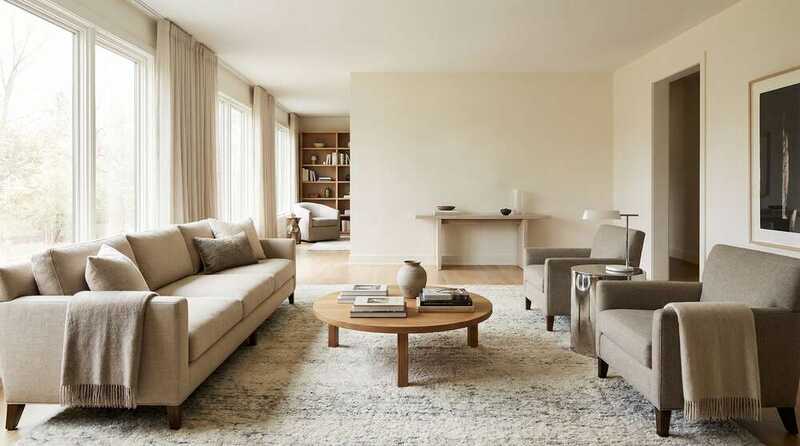
In living rooms, arrange seating in a conversational grouping with pieces facing each other, even if that means the sofa sits several feet from the wall. This creates an intimate zone that feels purposeful and inviting, while the space behind the sofa can be used for a console table, creating layers that add visual interest.
3. Anchor with Area Rugs (Size Matters)
An area rug should be large enough that all furniture in a grouping sits at least partially on it—front legs on, back legs off is the classic approach. This visually ties the pieces together and defines the zone. A rug that's too small makes furniture look like it's floating awkwardly in space and actually makes the room feel smaller.
For living rooms, aim for a rug that extends at least 6 inches beyond the sides of your sofa. In dining rooms, the rug should extend 24-30 inches beyond the table on all sides to accommodate pulled-out chairs. This single change can dramatically improve how grounded and spacious a room feels.
4. Balance Visual Weight
Visual weight refers to how heavy or substantial a piece of furniture appears. A large dark sofa has more visual weight than a light-colored armchair, even if they're similar in size. Distribute visual weight evenly around the room to create balance—if you have a heavy sofa on one side, balance it with a substantial bookshelf or large artwork on the opposite wall.
Avoid clustering all your heavy pieces on one side of the room, which creates an unbalanced, top-heavy feeling. Instead, think of the room as having four quadrants, each needing some visual interest and weight. This doesn't mean everything needs to be symmetrical—just balanced in a way that feels intentional.
5. Consider Sightlines and Focal Points
Every room needs a focal point—a fireplace, large window, TV, or piece of artwork that draws the eye. Arrange your furniture to face or complement this focal point, not compete with it. If your room has multiple focal points (like a fireplace and TV), arrange furniture to acknowledge both without creating competing conversation areas.
Think about what you see when you first enter the room. The view from the doorway should be inviting and clear, not a wall of furniture backs or a cluttered mess. Position your most attractive pieces or arrangements to be visible from the entrance, creating an immediate sense of welcome and purpose.
6. Scale Furniture to Room Size
Oversized furniture in a small room makes the space feel cramped and claustrophobic. Conversely, tiny furniture in a large room looks lost and makes the space feel empty. Choose pieces that are proportional to your room size—in small spaces, opt for furniture with exposed legs (which creates visual lightness) and avoid bulky, overstuffed pieces.
If you're working with an awkwardly shaped or very small room, consider multipurpose furniture like ottomans that serve as both seating and coffee tables, or nesting tables that can be tucked away when not in use. The goal is to have enough furniture to make the room functional without overcrowding it.
7. Maintain Proper Conversation Distance
In living rooms and seating areas, maintain 4-10 feet between facing sofas or chairs. Closer than 4 feet feels uncomfortably intimate for anyone but close friends and family. Farther than 10 feet makes conversation difficult and creates an impersonal, hotel-lobby feeling.
Coffee tables should sit 14-18 inches from the sofa—close enough to reach comfortably, but far enough that you don't bang your shins when sitting down. Side tables should be within easy reach of seating (no more than 12 inches away) and at approximately the same height as the chair or sofa arm for easy access.
Room-Specific Arrangement Tips
Living Room
Create a primary conversation area with sofa and chairs facing each other. Add a secondary seating zone if space allows (like two chairs by a window). Ensure the TV is at eye level when seated, typically 42-48 inches from the floor to the center of the screen.
Bedroom
Center the bed on the longest wall, leaving equal space on both sides for nightstands (24-30 inches of clearance). Leave at least 36 inches at the foot of the bed for easy movement. If space is tight, skip the dresser and use a wall-mounted TV or artwork as the focal point.
Dining Room
Center the table in the room, leaving 36-48 inches between the table edge and walls or furniture for comfortable chair pull-out. Hang a chandelier or pendant light 30-36 inches above the table surface. If the room is narrow, consider a round table instead of rectangular to improve flow.
Small Spaces
Use furniture with exposed legs to create visual lightness. Choose a loveseat instead of a full sofa, or use two armchairs to create flexibility. Mount the TV on the wall to save floor space. Use vertical storage (tall bookcases, wall shelves) to draw the eye up and make ceilings feel higher.
Common Furniture Arrangement Mistakes to Avoid
Pushing Everything Against the Walls
As mentioned earlier, this is the most common mistake. It creates awkward empty space in the center and makes the room feel disconnected. Instead, create intentional furniture groupings that float in the space, with clear purpose and function.
Blocking Windows and Doorways
Furniture should never block natural light sources or impede door swings. Keep windows clear to maximize light, and ensure doors can open fully without hitting furniture. If you must place furniture near a window, choose low-profile pieces that don't obstruct the view or light.
Ignoring Traffic Patterns
Watch how people naturally move through your space before committing to an arrangement. If you find yourself constantly walking around furniture or taking circuitous routes, rethink the layout. The most direct path between two points should be clear and obvious.
Matching Everything Too Perfectly
While coordination is good, perfectly matched furniture sets can look stiff and showroom-like. Mix pieces of different styles, heights, and materials for a more collected, lived-in look. This also makes the room feel more spacious by adding visual variety and interest.
Forgetting About Lighting
Furniture arrangement affects lighting needs. Ensure reading chairs have adequate task lighting, and don't position seating where people will be backlit by windows (creating uncomfortable glare). Layer ambient, task, and accent lighting to make the space functional at all times of day.
Budget-Friendly Tools for Planning Your Layout
Before moving heavy furniture, plan your arrangement on paper or digitally. Measure your room and furniture pieces, then use graph paper (1 square = 1 foot) to sketch different layouts. Free online tools like Roomstyler or Planner 5D let you visualize arrangements in 3D before committing.
Another low-tech option: use painter's tape on the floor to mark furniture footprints. This lets you walk through the space and test traffic patterns before moving anything. Take photos from different angles to see how the arrangement looks from various viewpoints.
Budget-Friendly Furniture for Better Arrangements
If your current furniture isn't working for your space, these budget-friendly pieces can help you create a better arrangement without breaking the bank:
Your Action Plan for Better Furniture Arrangement
Ready to rearrange your space? Follow this step-by-step process for the best results:
Week 1: Measure your room and all furniture pieces. Sketch the space on graph paper or use a digital room planner. Identify your focal point and traffic patterns. Mark doorways, windows, and outlets.
Week 2: Test your planned arrangement using painter's tape on the floor. Walk through the space multiple times, testing different traffic patterns. Sit in various spots to check sightlines and conversation distances.
Week 3: Implement your new arrangement. Start with the largest pieces first (sofa, bed, dining table), then add smaller pieces. Step back frequently to assess balance and flow. Take photos to see the space with fresh eyes.
Week 4: Live with the arrangement for a week, making small adjustments as needed. Pay attention to how you actually use the space—if something isn't working, don't be afraid to make changes.
Final Thoughts
Great furniture arrangement isn't about following rigid rules—it's about understanding principles and adapting them to your specific space and lifestyle. The goal is to create a room that feels spacious, functions well for your needs, and reflects how you actually live.
Start with these foundational rules, then trust your instincts. If an arrangement feels awkward or cramped, it probably is. Keep experimenting until you find a layout that makes your room feel open, inviting, and perfectly suited to your life. The best part? This transformation costs nothing but time and effort—no new furniture required.
Related Articles
Affiliate Disclosure: This post contains affiliate links, which means we may earn a small commission if you make a purchase through these links, at no additional cost to you. We only recommend products we genuinely believe will help you create a beautiful home on a budget. Read our full affiliate disclosure for more information.